Pectinase for Apple Juice and Cider Production
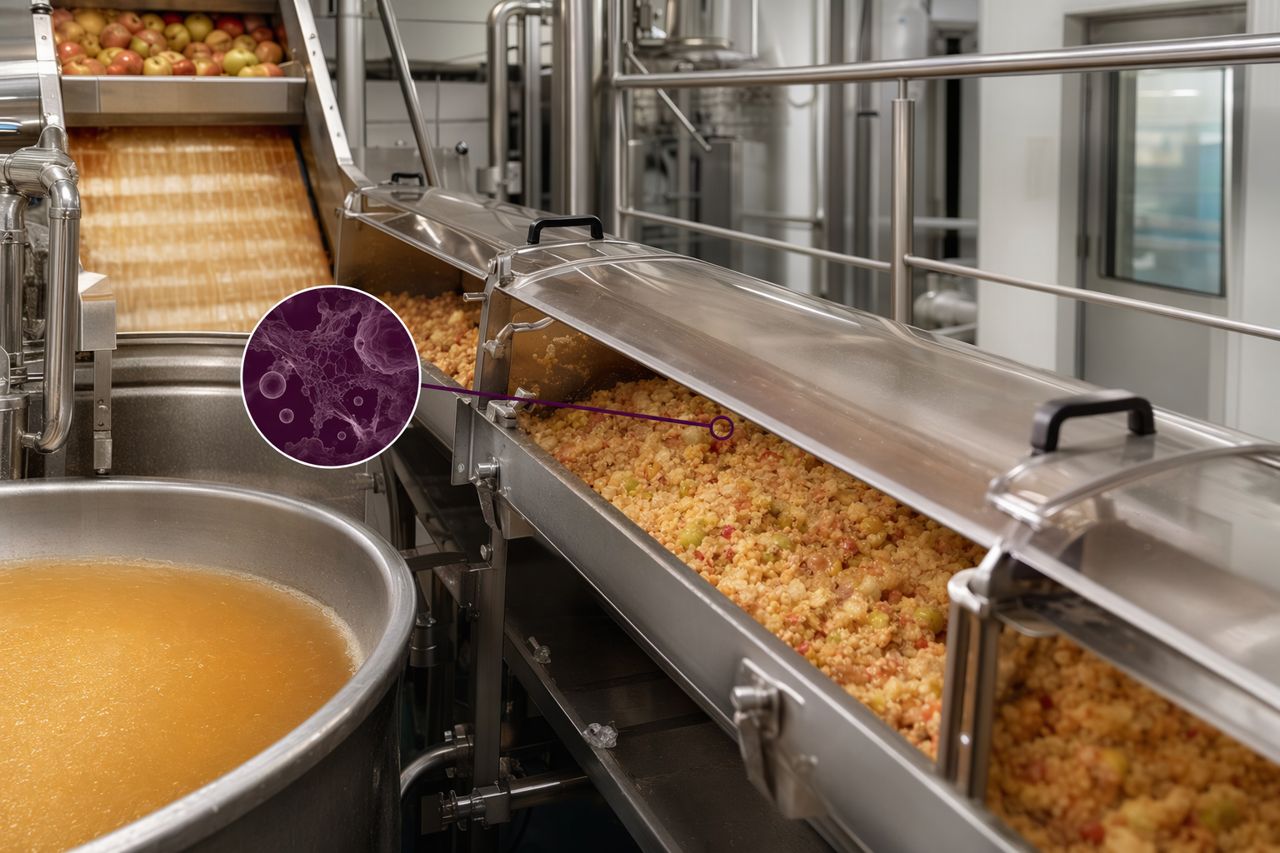
Apple pectin gives fruit structure. In processing, that same structure can slow pressing, hold juice inside the pomace, keep pulp suspended, and load downstream filtration. Pectinase Enzyme Solutions supplies Pectinase (Pectinolytic Enzyme) in bulk to apple juice, concentrate and cider producers, and to the distributors who supply them, for lines that need higher press yield, faster separation and more predictable clarification.
Our pectinase is specified for practical production work: mash treatment before pressing, clarification after extraction, cider base preparation, concentrate pre-treatment, and filtration support where viscosity and haze-forming colloids limit throughput.
Buying for a plant or for resale? We supply apple-line pectinase to manufacturers, distributors and resellers on a quote basis; send the product, quantity and destination. Request a quote.
What pectinase does in apple processing
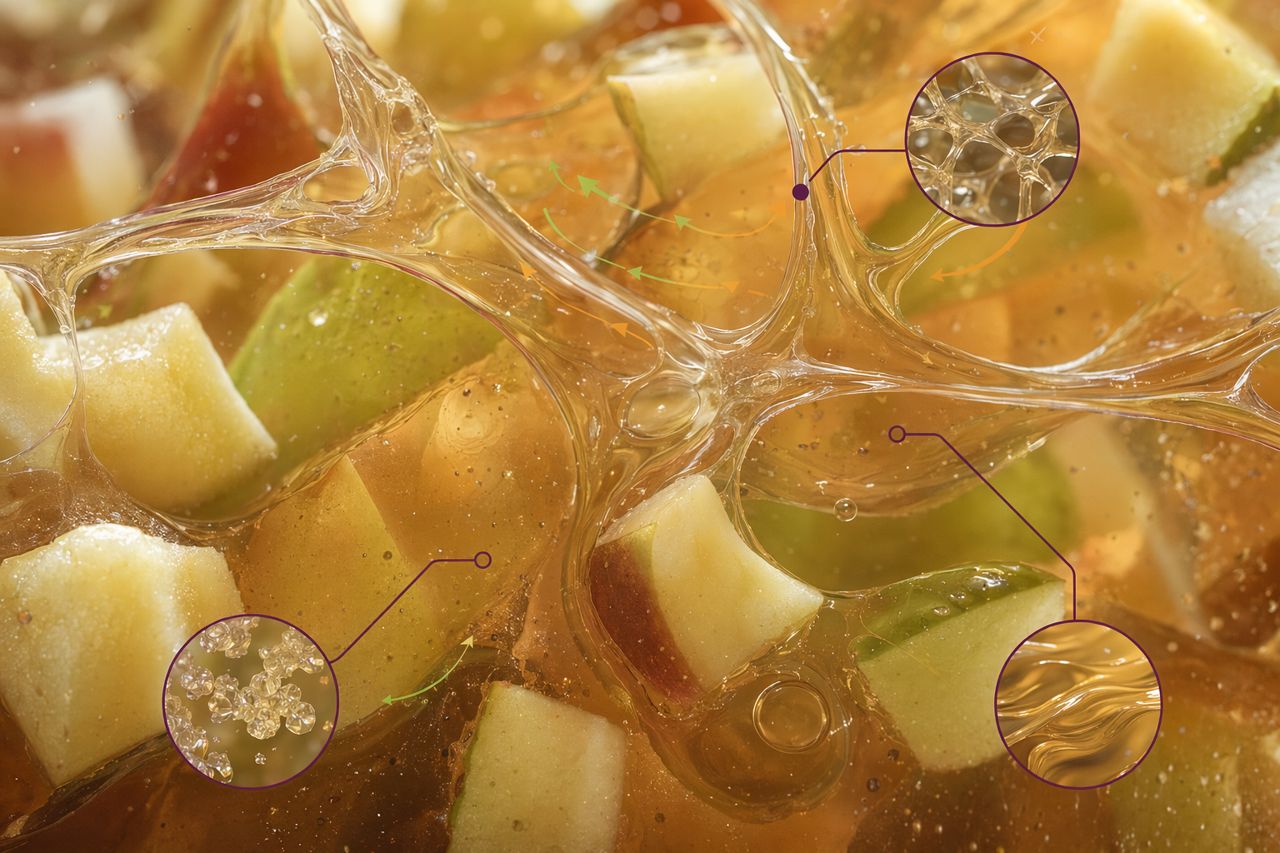
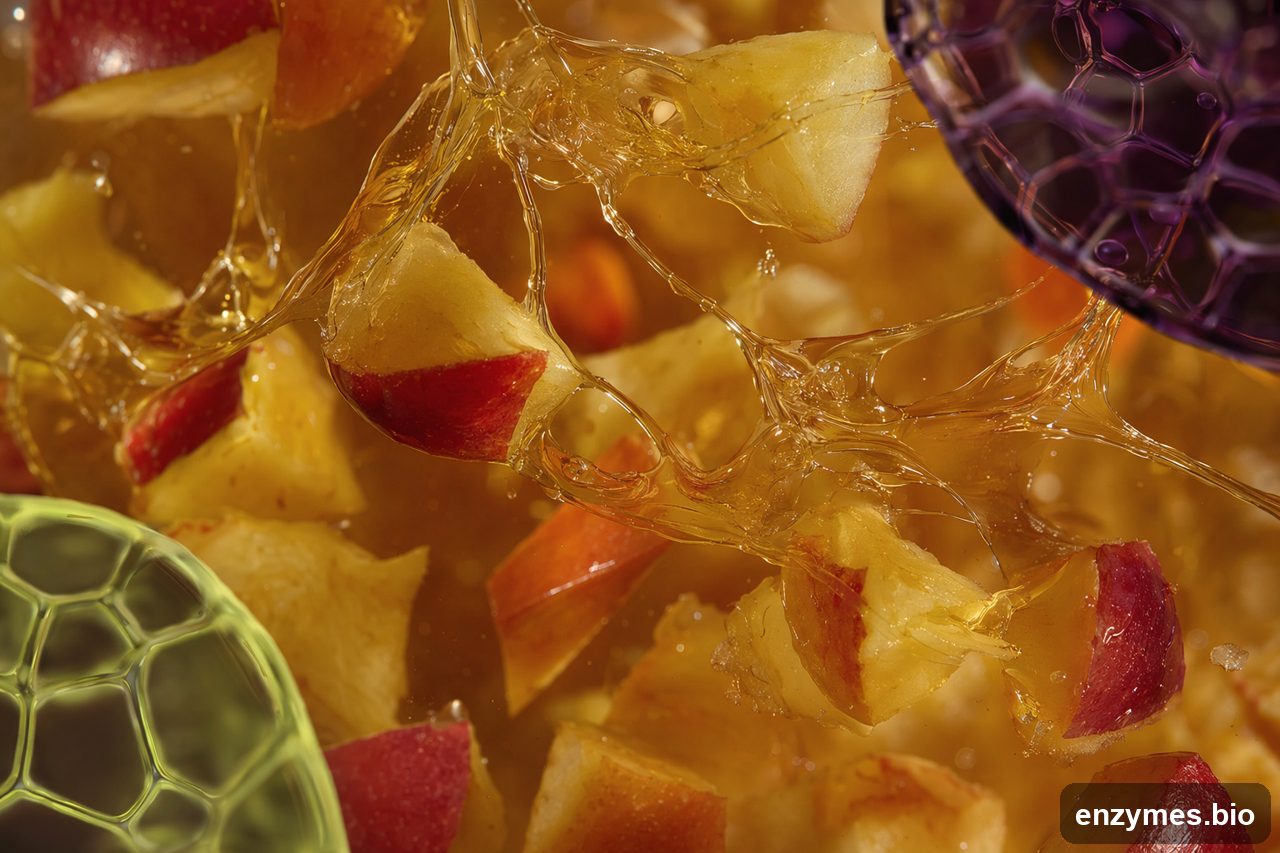
Pectinase breaks down the pectic network that binds apple pulp and stabilizes cloudy suspensions. Used correctly, it helps convert a resistant mash or turbid juice stream into a more manageable liquid phase.
Typical processing benefits include:
- Improved juice release from crushed apple mash
- Reduced pulp viscosity for easier pumping and tank handling
- Better free-run flow and press drainage
- Faster sediment formation and more compact lees
- Improved clarification response before fining, centrifugation, membrane filtration, or polish filtration
- Lower fouling pressure on downstream filters when pectin is a limiting factor
- More consistent process behavior across variable apple lots
Where it fits in the line
Mash treatment before pressing
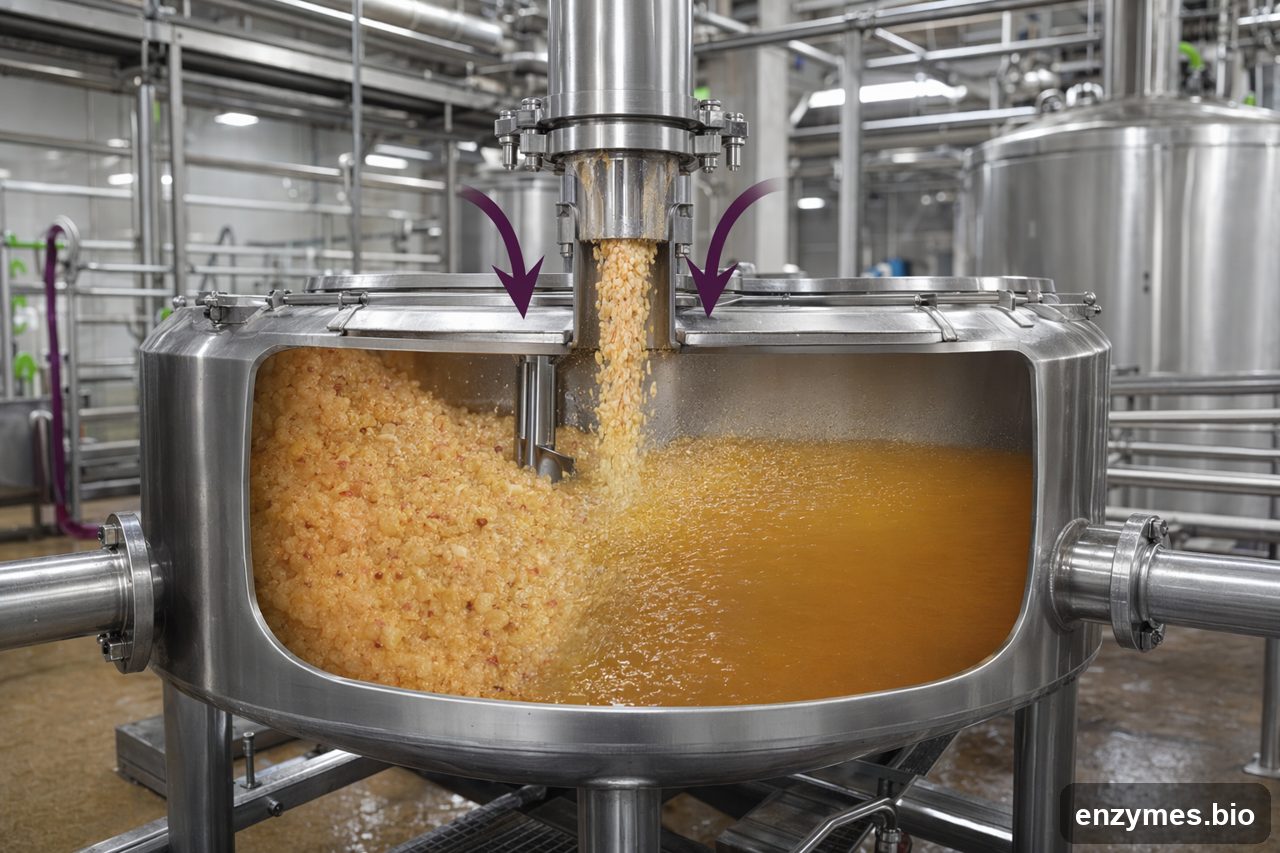
For processors focused on extraction yield and press efficiency, pectinase can be applied after milling or crushing and before pressing. The goal is to loosen the pectin-rich matrix, release bound juice, and make the press cake drain more freely.
This is especially relevant when apple varieties, storage condition, or ripeness produce a dense mash that resists flow.
Post-press clarification
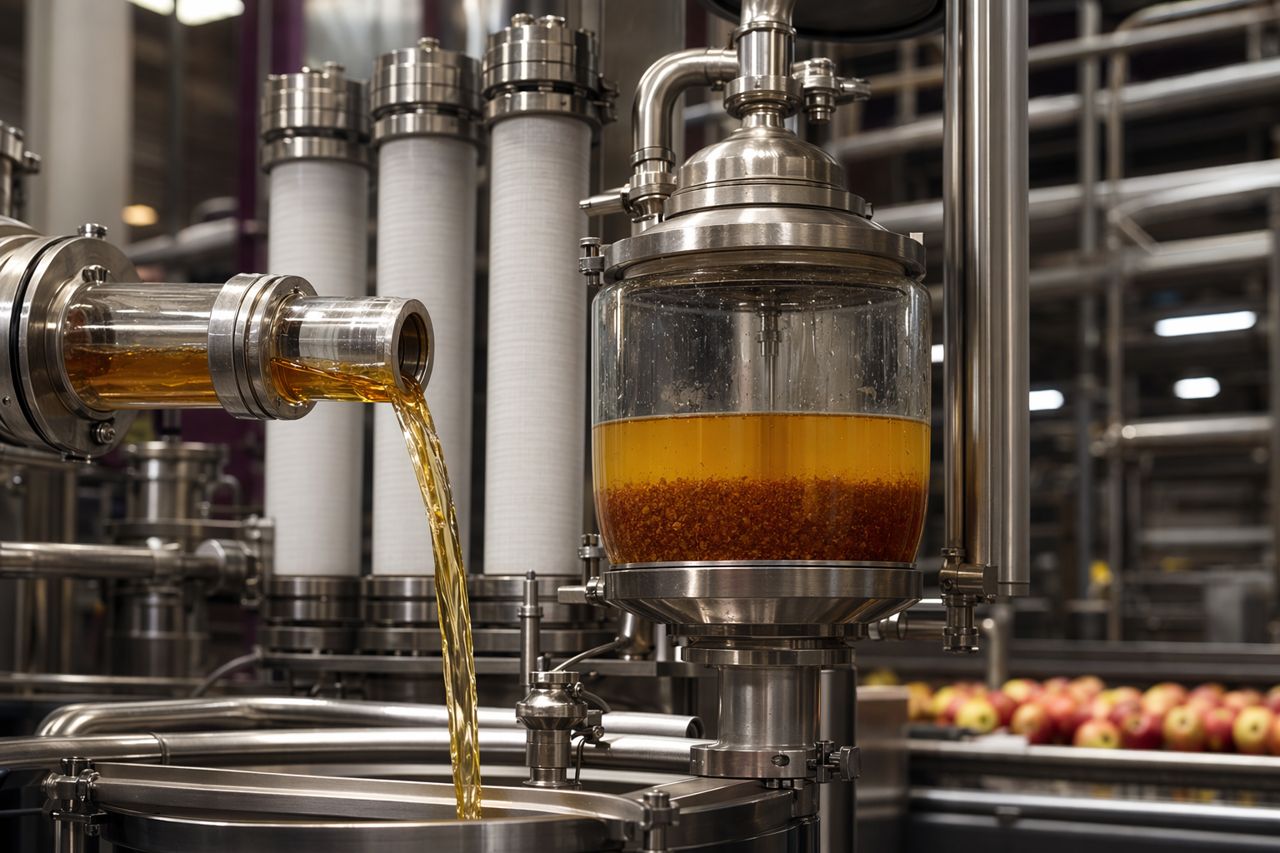
After pressing, residual pectin can keep fine particles suspended and interfere with clarification. Pectinase supports a cleaner separation profile by reducing viscosity and weakening colloidal stabilization.
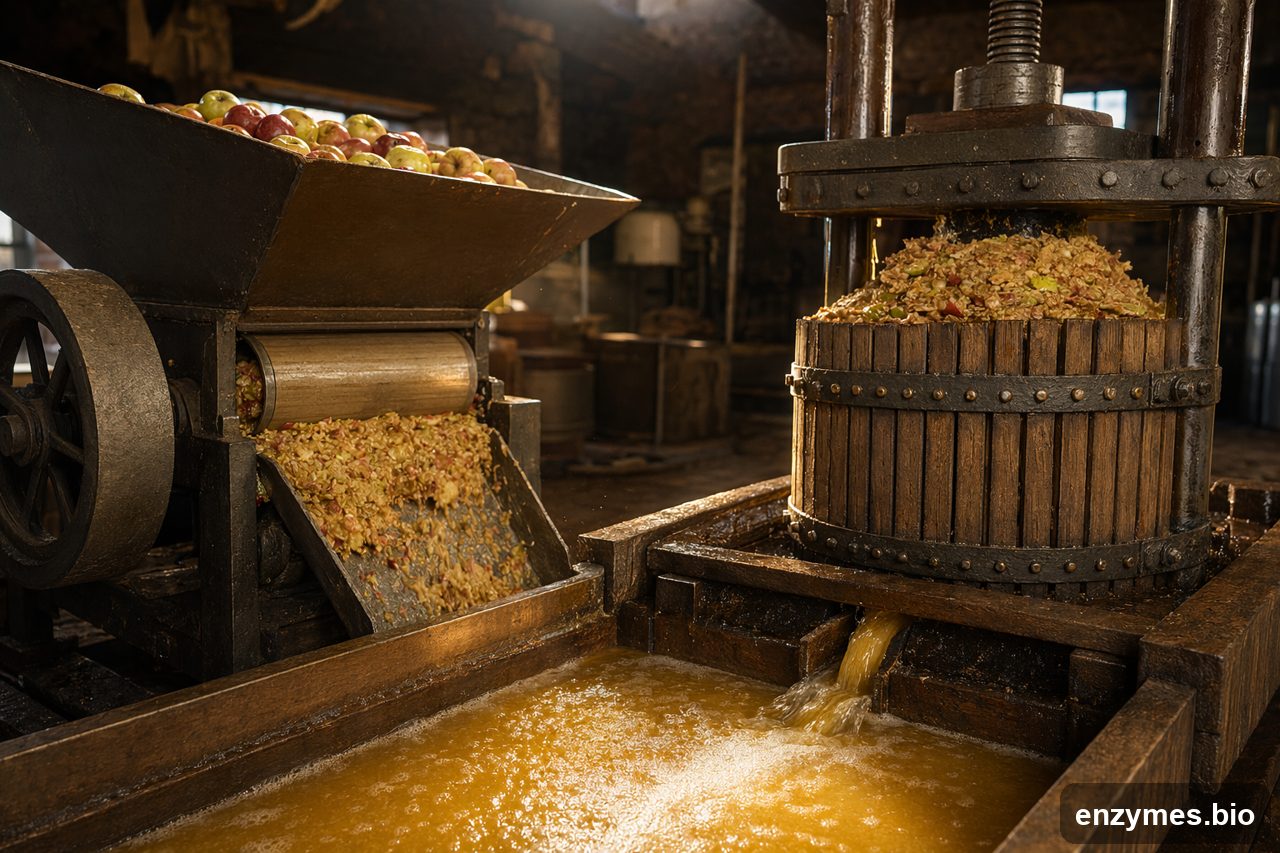
It can be used ahead of settling, flotation, centrifugation, fining, or filtration depending on the plant sequence.
Cider base preparation
For cider producers, pectinase can help create a more controlled juice base before fermentation or finishing. It supports solids management, improves clarification predictability, and can reduce downstream filter stress when haze and suspended solids are driven by pectin.
Apple concentrate and ingredient streams
Ingredient manufacturers handling apple juice, puree-derived streams, or concentrate feedstocks often face viscosity and filtration limitations. Pectinase helps condition these streams so evaporators, membranes, separators, and filters operate with less pectin-driven resistance.
What commercial apple lines report
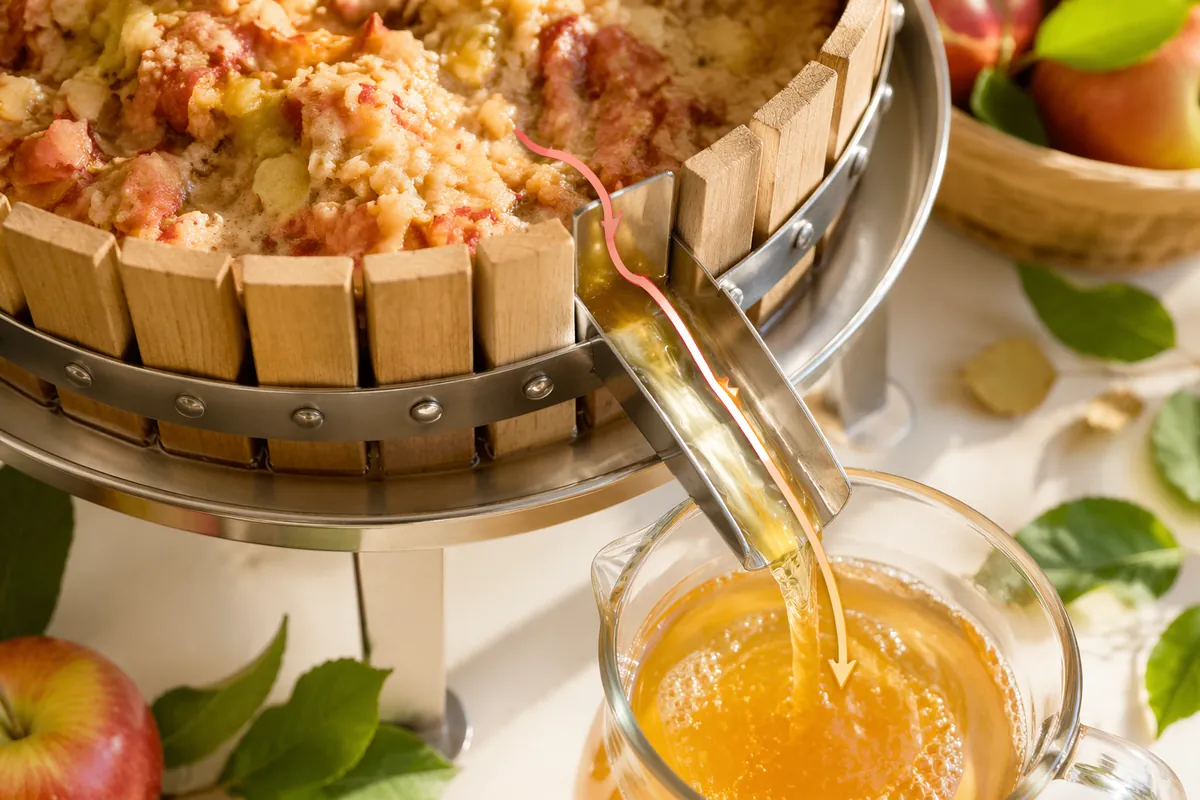
Apple juice from a plain press tends to be thick, filters slowly, and stays turbid even after settling. The cause is pectin forming a colloid network that holds fine particles in the liquid. For a juice plant this shows up as short filter runs, long tank holds and cloudy stock that has to be reworked.
Plants that run the full five-step line (intake, washing and grading, crushing and pressing, filtration and clarification, sterilising and filling) put the enzyme in two places. At the press, a pectinase mash treatment is one of four levers on juice yield, and the reported gain is 5-15%. The other three levers are crushing particle size, a stepwise press-pressure ramp instead of one high-pressure squeeze, and warming the mash to 45-50 °C to lower viscosity. Crushing is a balance: too coarse and juice stays in the fruit, too fine and the mash smears, blocks the press cloth and yield drops. Belt presses suit large continuous lines, while bladder presses press more evenly and give a higher yield per batch for premium juice.
For clear juice, the raw juice gets a second enzyme step: pectinase together with amylase breaks down pectin and starch, the two materials that cause haze and block filters. That clarification step is typically run at about 50 °C for 1-2 hours. Ultrafiltration then gives very bright juice, while microfiltration costs less and runs at higher flux for value lines. Cloudy apple juice skips depectinisation and relies on stabilisers to stop separation.
| Line decision | Clear apple juice or concentrate | Cloudy (NFC-style) juice | Cider base |
|---|---|---|---|
| Enzyme at the mash | Yes, for press yield | Yes, for press yield | Yes, for press yield |
| Second enzyme step | Pectinase plus amylase before filtration | Usually none | Settling support before fermentation |
| Main risk | Haze returning after filtration | Separation in the bottle | Slow lees compaction |
Common mistakes on apple lines:
- Raising the enzyme dose when the real problem is mash that was crushed too fine.
- Adding pectinase alone to a starch-positive juice and expecting it to filter.
- Judging the enzyme on clarity when the commercial target was press yield.
Send us your press type, whether you make clear or cloudy juice, and your expected monthly volume, and we will quote a mash enzyme and, where needed, a clarification blend.
Process variables that matter
Pectinase performance depends on the actual apple matrix and the way the line is run. Pectinase Enzyme Solutions reviews the process around practical variables such as:
- Apple variety mix and seasonal pectin behavior
- Fruit maturity, storage history, and milling profile
- Mash hold strategy and available contact time
- Juice pH and process temperature window
- Press type and desired cake dryness
- Clarification target: bright juice, cider base, concentrate feed, or pulp-adjusted product
- Downstream equipment: settling tanks, centrifuges, flotation systems, membranes, sheet filters, or cartridge filters
- Sulfite, fining aids, preservatives, or other processing inputs used on the line
We do not treat pectinase as a generic add-in. The target is a controlled process effect: easier release, cleaner separation, and filtration that behaves more predictably.
Buyer-useful specification notes
Pectinase Enzyme Solutions supports industrial buyers with the documentation and selection detail needed for procurement and plant trials.
Available discussion points include:
- Liquid or dry format fit, where applicable
- Recommended use point in the process
- Compatibility review with existing apple juice or cider operations
- Packaging and commercial supply planning
- Lot documentation, specification review, and regulatory documentation as applicable
- Trial design support focused on yield, turbidity, viscosity, press behavior, sediment, and filtration performance
Activity-unit and assay-method details are handled directly during technical qualification and are not published on this page.
Common production triggers
Processors typically evaluate pectinase when one or more of these issues appear:
- Press cycles are slow or variable
- Pomace leaves the press wetter than expected
- Mash is difficult to pump or distribute evenly
- Juice remains hazy after normal settling time
- Sediment is loose, bulky, or slow to compact
- Filter runs are short because of pectin-related fouling
- Cider base needs a cleaner, more repeatable clarification profile
- Seasonal apple changes disrupt a previously stable process
What to evaluate in a plant trial
A useful apple pectinase trial should measure more than visual clarity. We recommend tracking:
- Free-run juice behavior
- Press throughput and drainage pattern
- Pomace condition after pressing
- Juice viscosity trend
- Settling speed and sediment compactness
- Turbidity before and after clarification
- Filter run length and pressure behavior
- Final product target: bright, cloudy, cider base, concentrate feed, or ingredient stream
The best dosage and contact strategy are determined by process goals, fruit condition, and equipment constraints.
Why Pectinase Enzyme Solutions
Pectinase Enzyme Solutions is built for formulation teams, beverage processors, ingredient manufacturers, and industrial buyers who need enzyme decisions connected to line performance. We focus on the application window, not vague claims.
For apple juice and cider operations, that means pectinase selection tied to pressing, pulp handling, clarification, and filtration economics.
Request a wholesale quote
We supply apple-line pectinase (mash treatment and clarification grades) in bulk to manufacturers, distributors and resellers, on a quote-only basis. To get a recommendation and a price, send: the product or application, the quantity (trial lot, monthly or annual), the destination country, and the process step where the enzyme will be used. Format (liquid or powder) and pack size are quoted per order; tell us your preference if you have one.