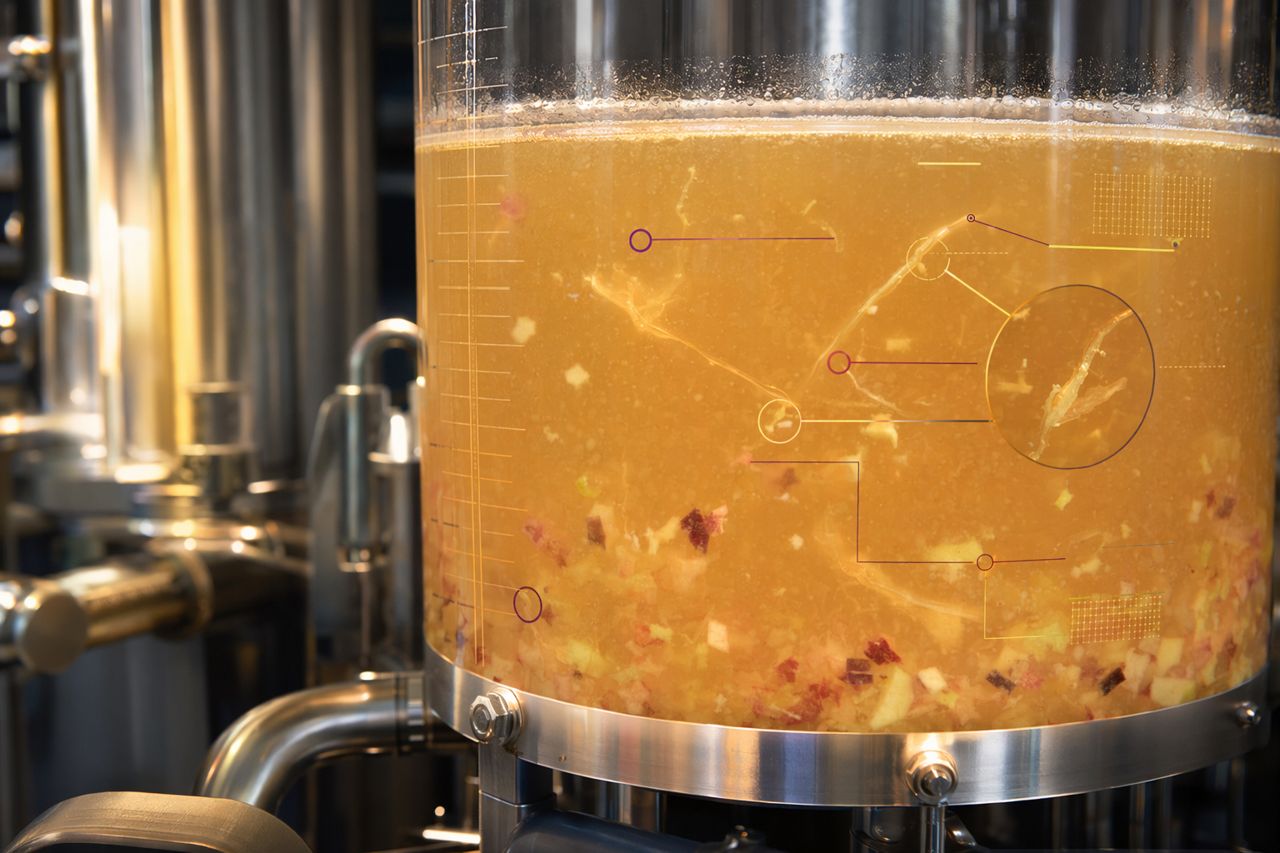
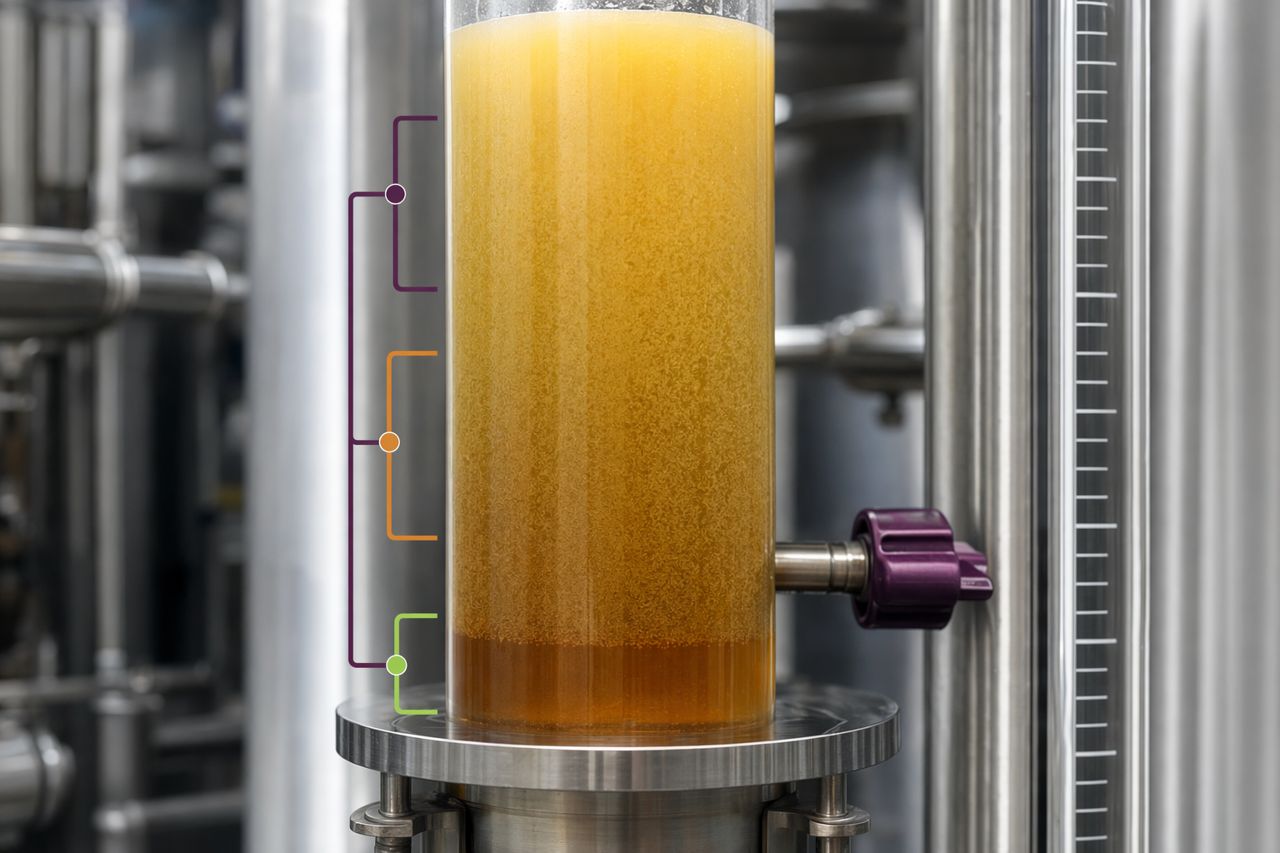
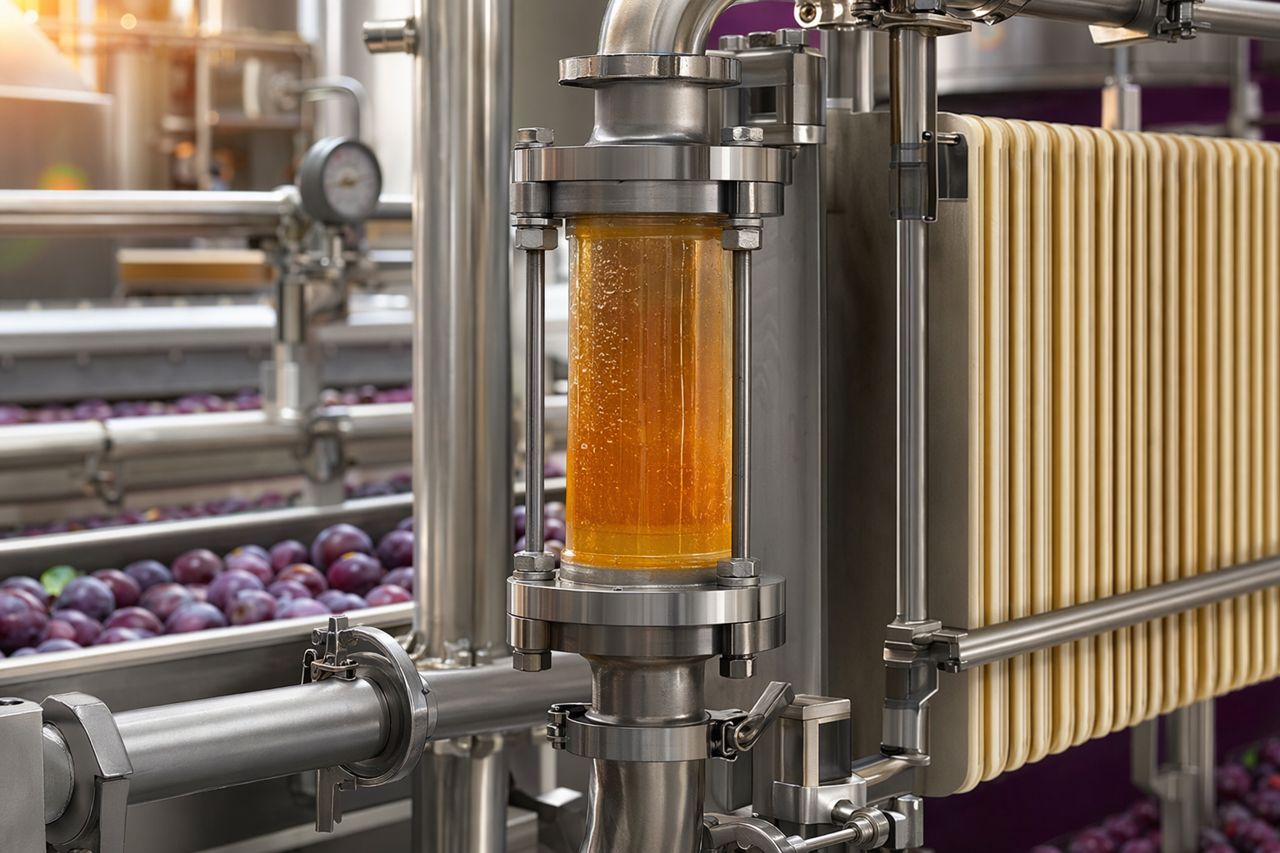
Pectinase for Fruit Juice Clarification
Pectin can turn a clean beverage process into a slow one. In fruit juice, it binds water, raises viscosity, holds suspended solids in place, and makes filtration feel like pushing liquid through a gel.
Pectinase Enzyme Solutions supplies Pectinase (Pectinolytic Enzyme) in wholesale quantities to juice processors, beverage manufacturers and the distributors who supply them, for clarification lines that need controlled pectin breakdown. The objective is practical: faster solids release, lower process resistance, more predictable clarity, and better movement through separation equipment.
Buying for a plant or for resale? Clarification enzymes are supplied in bulk to manufacturers, distributors and resellers on a quote basis; send the fruit, quantity and destination. Request a quote.
What pectinase does in juice processing
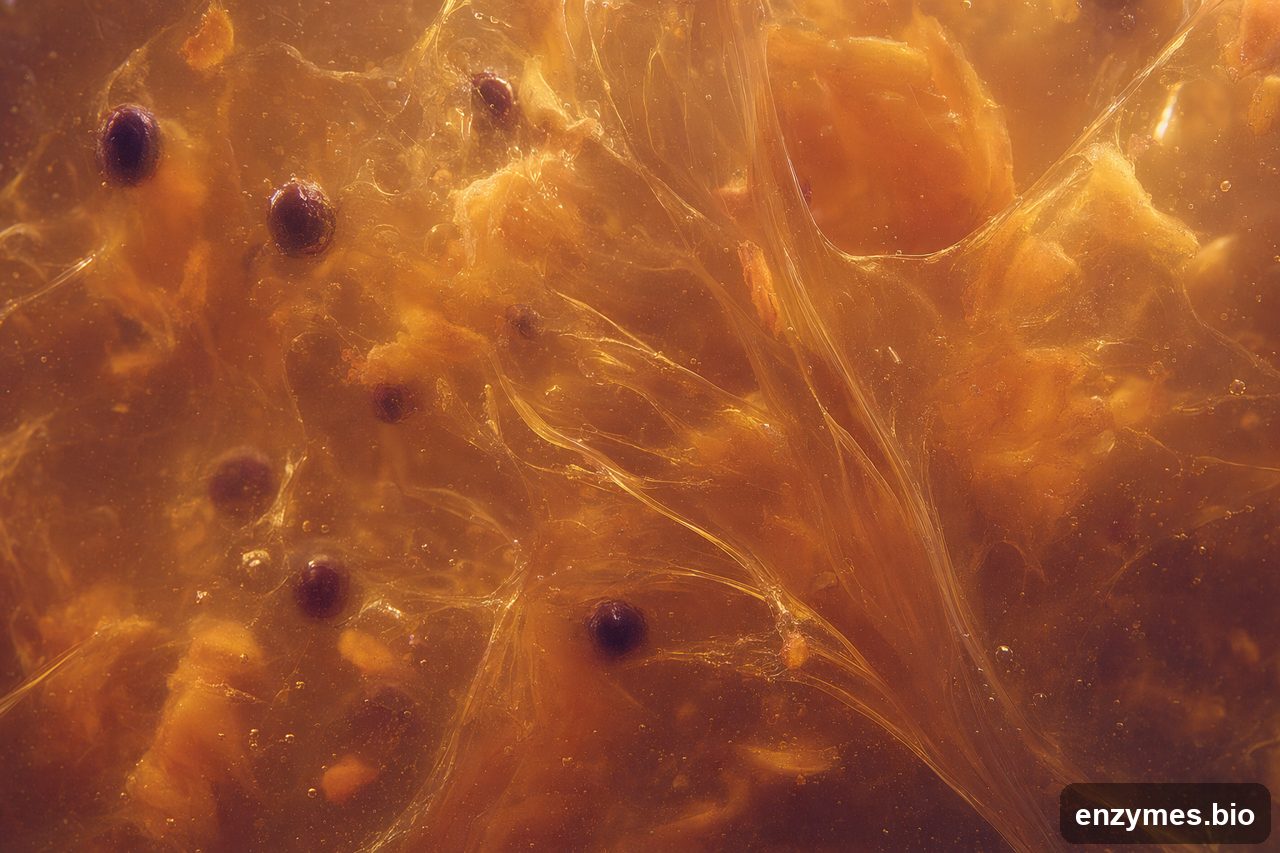
Pectinase acts on the pectic substances found in fruit cell walls and pulp. When these pectin structures remain intact, they can create haze, slow settling, high pulp drag, and difficult filterability.
In clarification, pectinase helps convert a tangled gel-like network into shorter, more mobile fragments. That shift supports:
- Reduced juice viscosity before separation
- Faster release of free-run liquid from pulp and mash
- Improved settling and decanting behavior
- Better response to fining and clarification aids
- Lower filter loading and slower blinding
- More consistent turbidity reduction across production lots
Built for fruit systems with variable pectin behavior
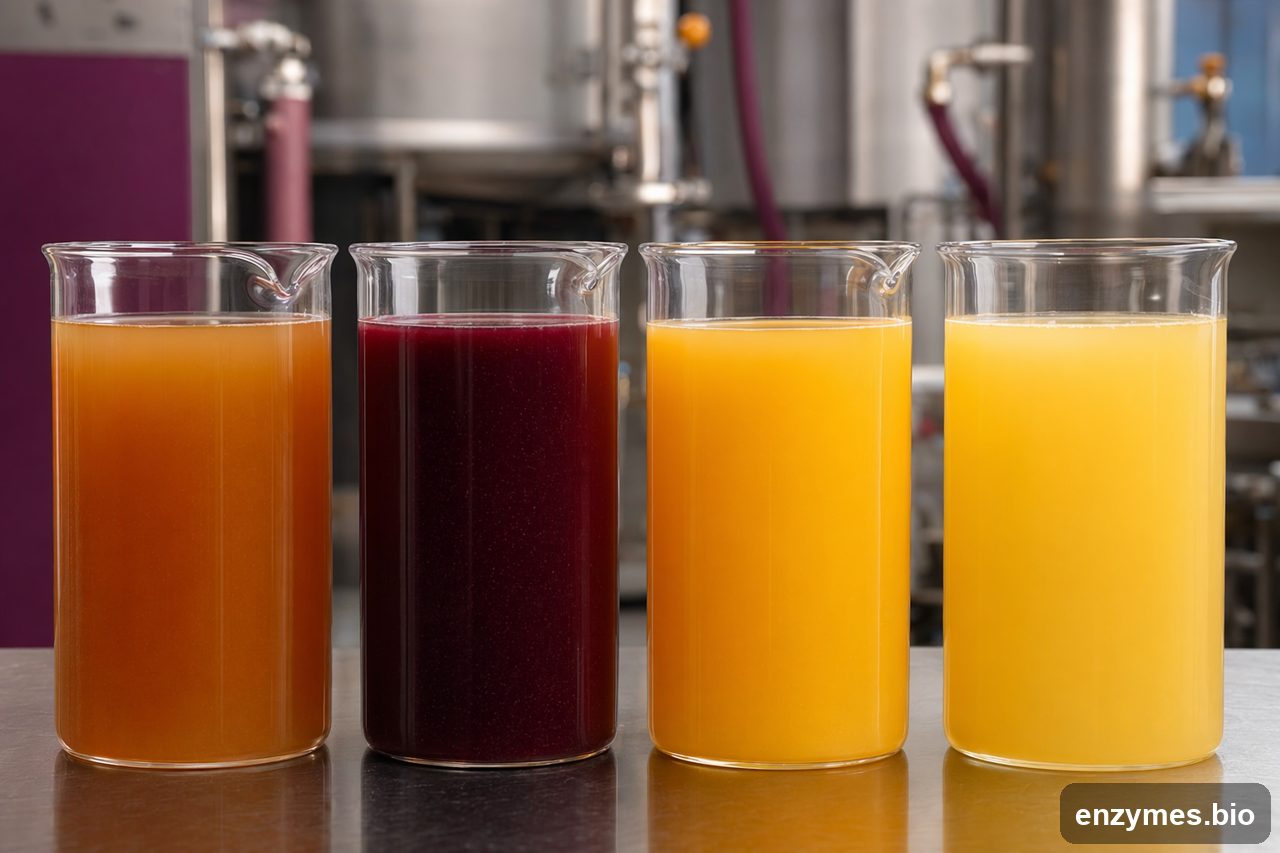
Different fruits do not behave the same way in tank. Apple juice may carry press-related pectin and fine pulp. Berry juices can retain color-rich suspended solids and seed-derived material. Tropical blends may combine puree viscosity with soluble pectin. Citrus blends can bring peel-derived pectin and emulsion complexity.
Pectinase is used where pectin is a process bottleneck in:
- Apple and pear juice clarification
- Berry juice and berry-based beverage bases
- Citrus-blend clarification and cloud adjustment workflows
- Tropical fruit systems, including mango, guava, passionfruit, and pineapple blends
- Mixed-fruit beverages, concentrates, and ingredient bases
- Pre-filtration conditioning for beverages with pulp-derived haze
Where it fits in the line
Pectinase can be positioned at several points depending on fruit type, process temperature, residence time, and target clarity.
Mash or pulp treatment
Applied before pressing or separation, pectinase can help loosen the fruit matrix, reduce pulp resistance, and improve liquid release. This is often useful when high pulp viscosity limits pressing, decanting, or puree handling.
Post-press holding
After juice extraction, pectinase can be used in a controlled holding step to reduce soluble pectin and prepare the juice for settling, fining, centrifugation, or filtration.
Pre-filtration conditioning
When filters blind quickly or differential pressure rises too fast, pectinase can be used upstream to reduce pectin-driven load before final clarification or polishing.
More juice is not the same as clear juice
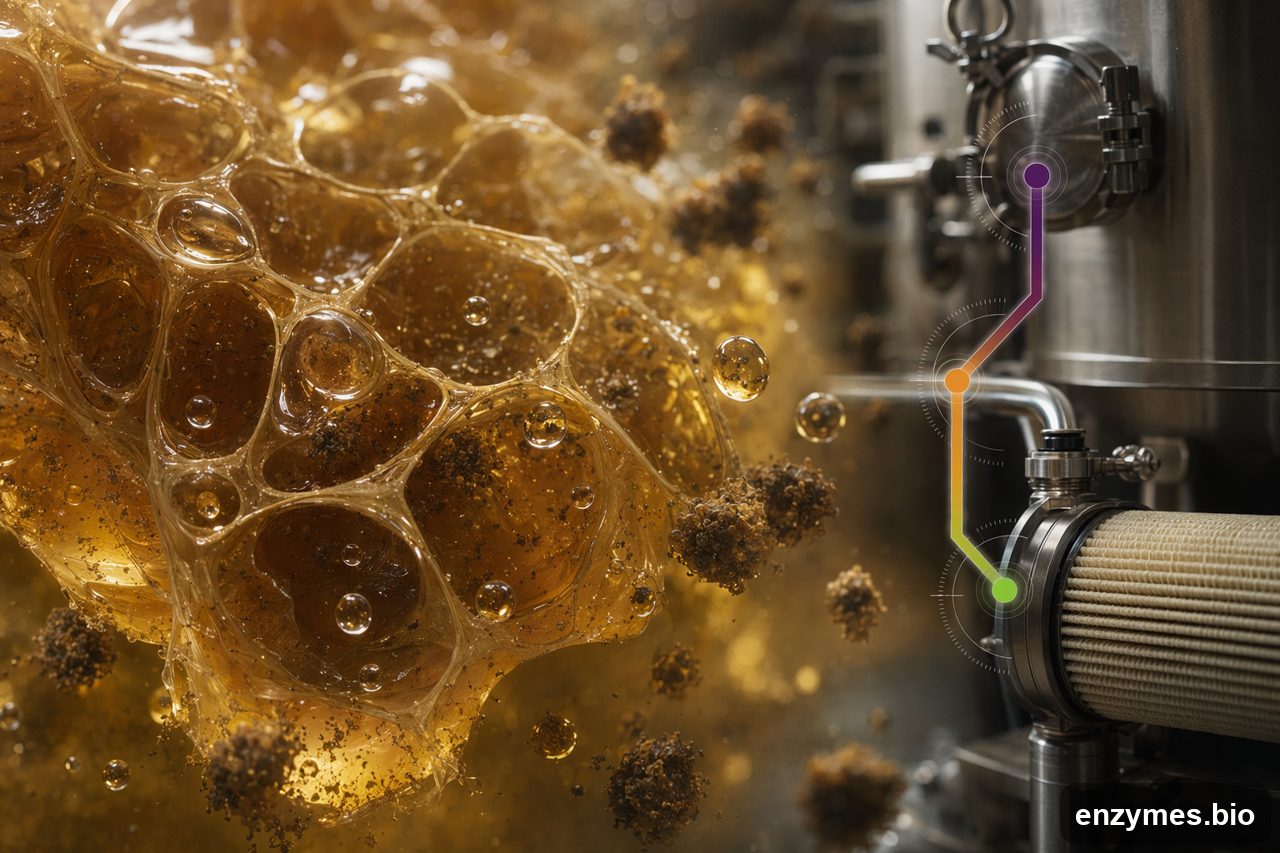
A common plant complaint: after crushing, homogenising and pectinase treatment the mash flows better, the press runs easier, yield and aroma are up, yet the filtered juice still looks hazy. Adding more enzyme lowers viscosity further but barely improves brightness, and harder homogenising can make the later filtration slower. The enzyme usually did its job; it finished the release step but not the clarification step. Three separate jobs are involved: releasing juice from the tissue, breaking down the pectin network and its viscosity, and removing the particles and colloids that scatter light by settling, centrifuging or filtering. Success in the first two does not finish the third.
First decide: clear juice or stable cloudy juice
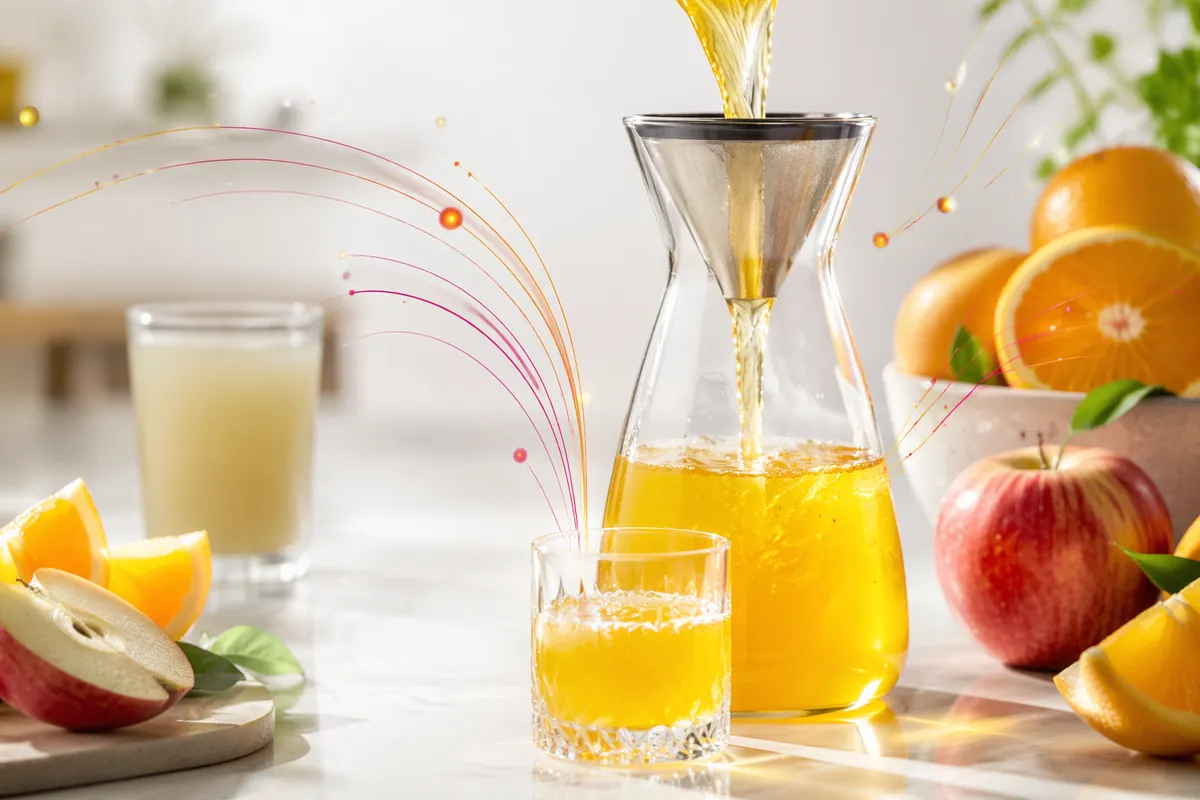
Before asking how much enzyme to use, define the product. For clear juice the targets are low haze and no haze returning in storage; for cloudy juice the targets are even suspension and no layering. The same enzyme or homogeniser step can push those two products in opposite directions. Pectin methylesterase is the clearest example: it can make cloud particles clump and settle, which helps a clear juice and ruins a cloudy one.
Why haze survives a pectinase step
| Haze source | How to spot it | What changes the result |
|---|---|---|
| Residual pectin | Alcohol precipitation test still positive | Enzyme with the right pectinolytic activities, enough contact time |
| Starch | Iodine test positive | Add a suitable amylase step; more pectinase will not help |
| Protein and polyphenol complexes | Haze appears after heating or cooling | Fining or heat-and-settle step |
| Fine particles from over-shearing | Juice stays evenly hazy, filters blind fast | Coarse screen before enzyme, controlled shear |
| Colour mistaken for haze | Light transmission up but colour also lighter | Measure turbidity and colour separately |
Kiwifruit shows the protein case well: a clear kiwi juice line treats the mash with pectinase at 20-25 °C, using more enzyme and a longer hold when the fruit has been in cold storage for months. Crushing too fine makes the mash so viscous that pressing becomes very difficult, so the fruit is crushed coarsely and cellulose powder is added as a press aid. The pressed juice is left to settle overnight while the enzyme keeps working, and the green, cloudy juice turns a slightly hazy yellow-green. What is left is soluble protein that clumps into an unpleasant sediment once the juice is warmed, so it has to come out before hot filling. Bentonite or silica sol helps, but the most effective route is a short high-temperature flash, rapid cooling and a hold, after which the protein settles and the clear top is filtered through diatomaceous earth.
A trial that separates release from clarification
- Run a no-enzyme control, your current programme and the candidate enzyme on the same batch of mash with the same heat history.
- Record four columns for each: yield, aroma, clarity right after treatment, and clarity after storage.
- Measure haze before and after the enzyme is inactivated; a jump at that point points to heat-driven clumping, not to the enzyme.
- Store samples under the real chill, ambient and swing conditions, because a juice that is bright on day one can still haze later.
- On a membrane line, find the limiting flux on real juice; once more pressure stops adding flow, fix the pre-treatment instead of pushing harder.
Tell us your fruit, whether the product is clear or cloudy, where the haze appears (after pressing, after heating or in storage) and your volume, and we will quote a clarification programme.
Signs that pectin is behind the haze
Not every haze is pectin haze. When the cloud is persistent, gel-like, slow to settle and hard to filter, pectin is usually part of the structure holding it together. Typical signs:
- Slow settling after pressing or extraction
- High viscosity in juice, mash or extract
- Poor separation in the centrifuge and rapid filter blinding
- Haze that remains after coarse filtration
- Soft gel forming in holding tanks
- Clarification that varies from one fruit lot or harvest period to the next
| Observation | Likely implication | Process response |
|---|---|---|
| Liquid stays viscous and slow to settle | Pectin network may be stabilising solids | Review enzyme contact time and mixing |
| Filter pressure rises quickly after coarse removal | Fine colloid and hydrocolloid load may be high | Treat earlier, then clarify before polishing |
| Cloud varies by fruit lot | Raw-material pectin and maturity vary | Build a pilot dose curve by lot type |
| Haze appears after heating | Protein, pectin or polyphenol interactions | Review heat step, enzyme timing and fining sequence |
| Good settling but final haze remains | Non-pectin colloids may dominate | Add complementary clarification controls |
| Works in the lab but not in the plant | Mixing, temperature, residence time or sequence differ | Match pilot conditions to plant reality |
A common mistake is using pectinase as an emergency additive at the end of the line. It usually performs better placed before the pectin network has already overloaded the filters or the tanks.
Process outcomes buyers usually care about
Pectinase selection should be tied to operational goals, not generic enzyme language. Typical commercial targets include:
- Shorter clarification cycles
- More stable filter runs
- Less tank-to-tank variability
- Improved throughput in centrifuge or filtration steps
- Reduced haze caused by soluble pectin
- Lower hold-time risk before packaging or concentration
- Better process control when fruit supply changes by season or origin
Selection factors for formulation and operations teams
The right pectinase choice depends on the process window. Pectinase Enzyme Solutions can support product matching based on:
- Fruit or blend composition
- Pulp level and insoluble solids profile
- Natural pectin load and seasonal variation
- Addition point in the process
- Temperature and pH window
- Intended residence time
- Filtration, centrifugation, or settling equipment
- Need for liquid or dry handling format
- Documentation and specification requirements for industrial purchasing
We keep evaluation discussions practical. Tell us what is slowing the line, what equipment follows the enzyme step, and what clarity target matters commercially.
What this enzyme is not intended to do
Pectinase is not a universal fix for every haze problem. Protein haze, starch haze, microbial instability, oil emulsions, and mineral interactions may require different process controls. In many beverage systems, pectinase is one part of a broader clarification strategy.
That distinction matters. It prevents over-treatment, protects product identity, and keeps trials focused on measurable production outcomes.
Documentation and commercial supply
Pectinase Enzyme Solutions supports B2B purchasing teams with specification documentation, safety documentation, lot-level information, and practical handling guidance for commercial evaluation. Availability can be discussed for development trials, scale-up, and ongoing production supply.
Request a wholesale quote
We supply juice-clarification pectinase and clarification blends in bulk to manufacturers, distributors and resellers, on a quote-only basis. To get a recommendation and a price, send: the product or application, the quantity (trial lot, monthly or annual), the destination country, and the process step where the enzyme will be used. Format (liquid or powder) and pack size are quoted per order; tell us your preference if you have one.