Food-Grade Pectinase: Application Considerations
Pectinase is specified when pectin is the process bottleneck: juice trapped in pulp, slow clarification, high viscosity, low extraction, unstable haze, or filtration that loads too quickly. For food and beverage processors, the question is not simply whether pectinase works. The sharper question is where it should be placed, what pectin structure it must act on, and how the treatment will be measured against yield, clarity, throughput, and finished-product requirements.
Pectinase Enzyme Solutions supplies food-grade pectinase in bulk to juice, wine and ingredient manufacturers and to resellers that need clean documentation, application-fit guidance, and a practical path from bench trial to production use.
Buying for a plant or for resale? Food-grade pectinase is supplied in bulk on a quote basis; send the product, quantity and destination country. Request a quote.
What pectinase does in a process
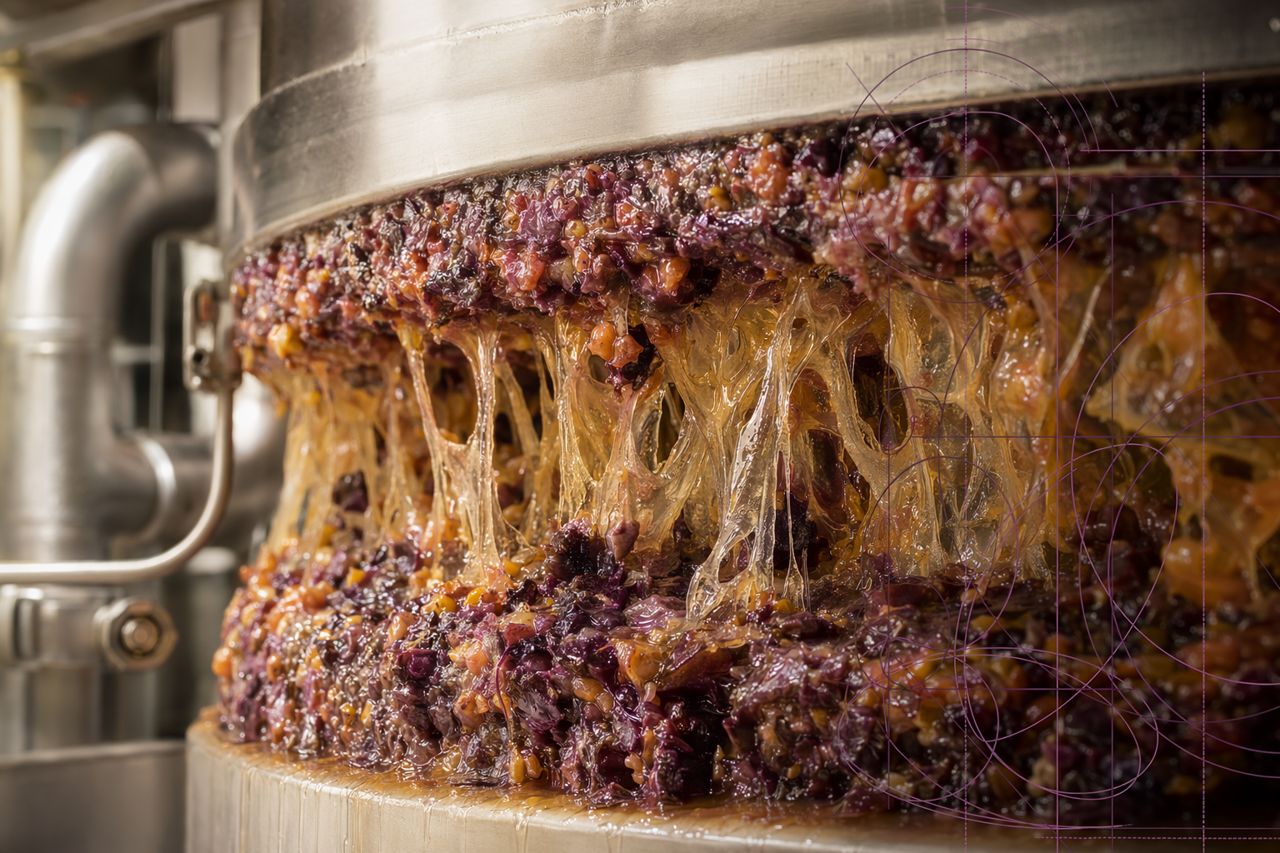
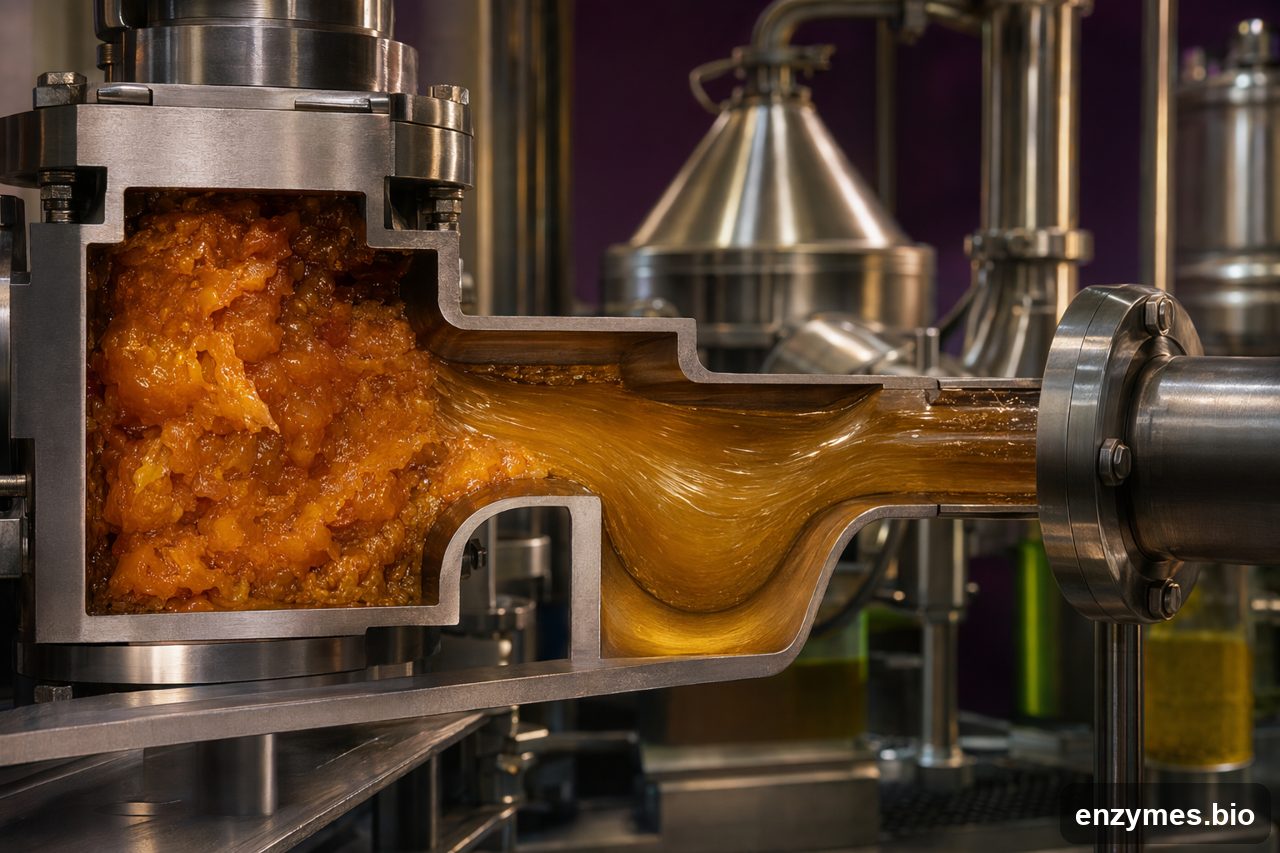
Pectin is a structural polysaccharide in fruit cell walls and middle lamellae. In hydrated pulp systems, it can form gel-like networks that hold liquid, suspend fine particles, and increase viscosity. Pectinase breaks down those networks so the process stream becomes easier to press, settle, clarify, filter, concentrate, or extract.
A commercial pectinase may include several pectinolytic activities, commonly targeting different points in the pectin chain or side structure. The practical outcome is process-dependent:
- More available free-run and press liquor from fruit mash or pomace-heavy streams.
- Lower viscosity in puree, concentrate, and extraction lines.
- Faster settling of suspended solids in juice and wine production.
- Improved filterability where pectin haze or gel loading limits flow.
- Cleaner separation behavior before decanting, centrifugation, membrane filtration, or polishing.
Where food-grade pectinase is commonly used
| Processing area | Typical pectin-related issue | What to evaluate |
|---|---|---|
| Apple, pear, and stone fruit juice | Press yield, turbidity, slow clarification | Yield gain, settling profile, filter load, color impact |
| Citrus and tropical fruit systems | High viscosity, pulp structure, cloud management | Viscosity reduction, pulp release, desired cloud retention or removal |
| Grape must and wine | Slow juice release, compactness of lees, difficult filtration | Free-run volume, settling speed, lees volume, filterability, sensory neutrality |
| Purees and concentrates | Thick flow, poor heat-transfer behavior, difficult pumping | Viscosity curve, pumpability, concentration efficiency, texture target |
| Botanical and plant ingredient extraction | Bound soluble solids, dense cell-wall matrix | Extraction yield, separation quality, downstream clarification |
Pectinase is not a universal haze solution. If the limiting factor is starch, protein, beta-glucan, suspended oil, mineral instability, or microbial load, pectinase may need to be paired with another process intervention or used only as part of a broader clarification strategy.
Key selection considerations
1. Substrate and pectin character
Different fruits carry different pectin structures. Apple and pear systems often behave differently from citrus, berry, grape, or tropical fruit streams. Ripeness, storage history, heat exposure, and mechanical disruption can also change how pectin behaves in the process.
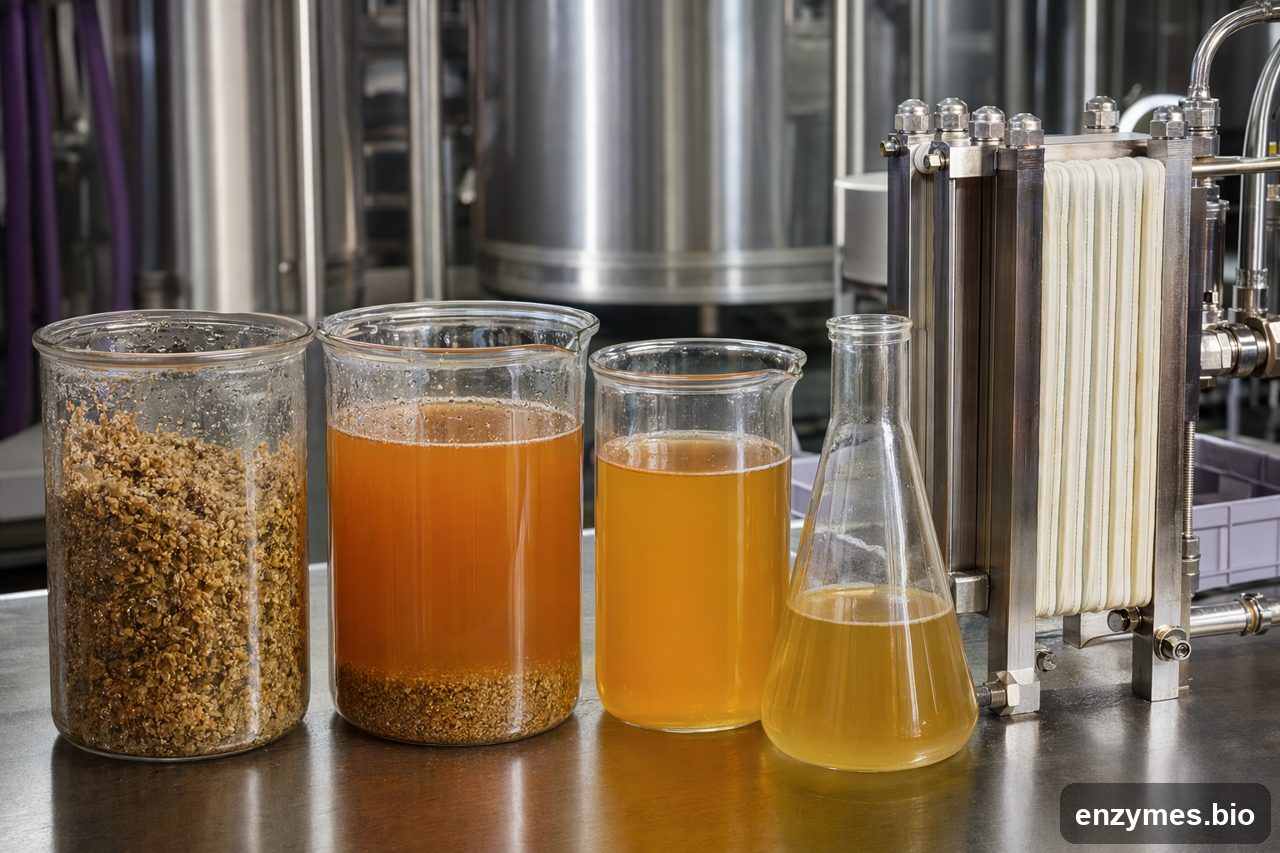
When discussing a pectinase specification, provide the substrate, whether it is mash, juice, must, puree, concentrate, peel extract, or pomace-derived material, and the current pain point. A viscosity problem in puree requires different validation than a filterability problem in clarified juice.
2. Process placement
Pectinase can be applied at several points, including mash treatment before pressing, must holding before settling, juice treatment before clarification, or ingredient extraction before separation. Placement changes the result.
- Before pressing: often used to improve release and reduce retained liquid in solids.
- Before settling or centrifugation: used to loosen suspended gel structures and support cleaner separation.
- Before filtration: used when pectin contributes to rapid filter loading or unstable haze.
- During extraction: used to release soluble material from plant tissue and improve downstream handling.
The best placement is usually the earliest point where pectin is limiting the process and the stream conditions still support enzyme performance.
3. pH, temperature, and contact time
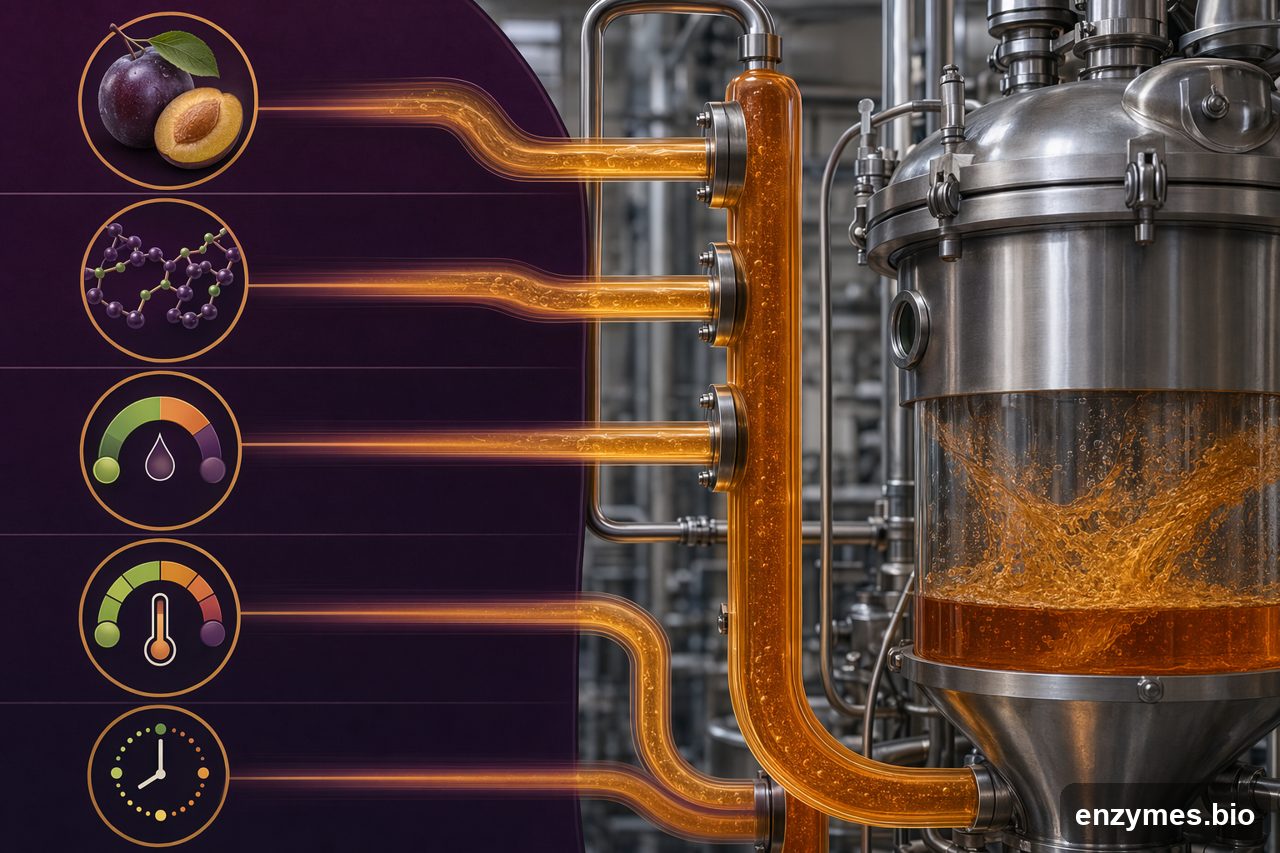
Food-grade pectinase must be matched to the natural process pH, thermal exposure, and practical residence time. A mash tank, wine settling tank, continuous extraction step, and pre-filtration hold all create different working windows.
For trial planning, capture:
- Process pH and whether it shifts during the step.
- Typical and maximum temperatures during contact.
- Available hold time before pressing, settling, filtration, or heating.
- Whether the stream is agitated, static, pumped, or recirculated.
- The point at which enzyme activity must be stopped or made irrelevant by the process.
4. Compatibility with the full formulation
Pectinase performance can be affected by preservatives, sulfur dioxide management in wine, high solids, alcohol level, polyphenol load, divalent minerals, cleaning residues, and extreme osmotic conditions. It should also be evaluated against color, aroma, mouthfeel, and any desired cloud stability.
For cloudy beverages, the target may not be maximum clarification. The target may be controlled viscosity, better yield, or improved separation without stripping the product of its intended body. Define that target before running trials.
What juice plants compare when they choose a supplier
Pectinase is not one enzyme but a family name for enzymes that break down pectin, including polygalacturonase, pectin lyase and pectin esterase. Most food-grade pectinase sold today is produced by fermentation of Aspergillus niger. In a juice line it does two things buyers pay for: it softens the fruit tissue so juice presses out more easily, and it lets suspended solids lose their support and settle, so juice filters faster and clears. The same enzyme family is also used to make plant extracts such as ginkgo leaf extract, garlic oil concentrate and ginseng pulp, and in papermaking to separate plant fibres.
Juice plants choosing a supplier are told to weigh the same handful of points. Activity decides how quickly and how far the pectin is broken down; stability decides whether that activity holds across different temperatures, pH values and messy real juice. Quality and safety come next: products that are tested to a recognised standard, so the juice itself passes its own checks. Last is technical support: a supplier that answers quickly and helps solve problems on the line. Large international producers compete on proven activity and global use, while regional producers often compete on price and on products tuned to local fruit and processes.
| What to compare | Why it matters to a juice or ingredient plant | What to ask for in a quote |
|---|---|---|
| Activity | Speed and depth of pectin breakdown | Activity basis and test method on the specification sheet |
| Stability | Performance at your real temperature and pH | Recommended working range for your process step |
| Quality and safety | Your finished product must pass its own checks | Specification, safety data and documents your market requires |
| Technical support | Fewer stalled batches during start-up and season change | Who helps with trials and line problems |
| Price per result | Cost per tonne of fruit treated, not per kilo of enzyme | Quote by volume and pack size |
For a quote, send the product (juice, wine, puree or extract), the process step, your annual or monthly quantity, your preferred pack and the destination country.
Documentation buyers should request
For food and beverage use, technical fit is only half of the buying decision. The product also needs to clear quality, regulatory, and procurement review.
Request the following before approval:
- Food-grade statement or suitability declaration.
- Product specification sheet.
- Safety data sheet.
- Allergen position.
- Carrier and excipient information.
- Genetically modified status where relevant to your market.
- Microbiological limits.
- Heavy metal and contaminant position where required.
- Country-of-origin and manufacturing-site information when needed.
- Kosher, halal, or other market-specific documentation if applicable.
- Storage and handling guidance.
- Shelf-life and packaging options.
Pectinase Enzyme Solutions can align documentation to the review sequence used by quality, regulatory, procurement, and plant operations teams.
How to run a practical pectinase trial
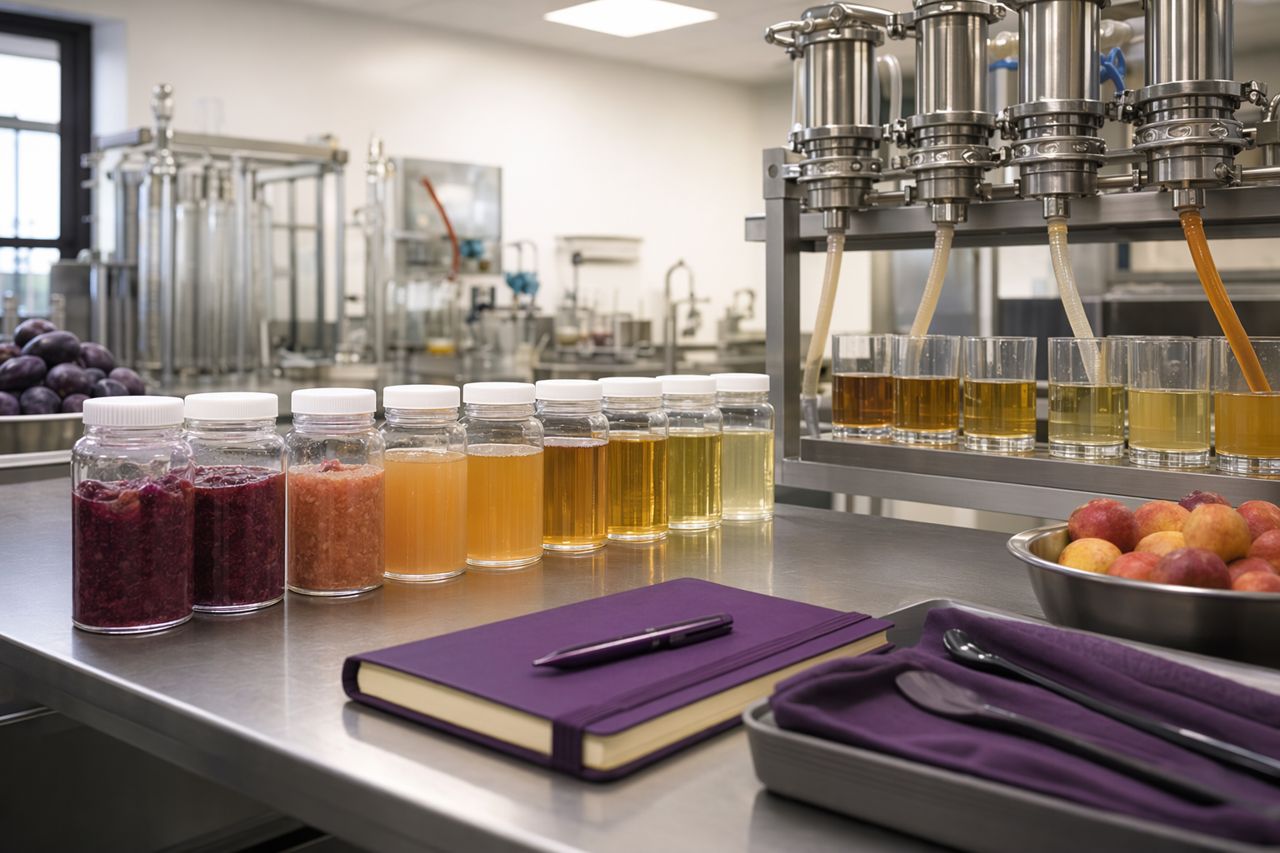
A good trial does not need to be complex, but it does need a clean baseline. Compare the pectinase candidate against your current process under conditions that reflect the plant, not an idealized lab scenario.
Recommended trial readouts
- Yield: free-run volume, press recovery, extractable solids, or retained liquid in spent solids.
- Clarity: turbidity trend, visual settling, haze stability, or polishing requirement.
- Viscosity: pumpability, flow behavior, or concentration handling.
- Separation: centrifuge performance, lees or sediment compactness, decanter behavior, or filter loading.
- Throughput: time to press, settle, filter, or reach the next process step.
- Quality: color, aroma, texture, cloud target, and finished-product specifications.
- Deactivation behavior: whether the downstream heat or process step adequately ends enzyme relevance.
What to avoid
- Testing only on clear juice when the real bottleneck is mash or puree.
- Judging success by clarity when the commercial target is yield or viscosity.
- Ignoring the impact of heat history, fruit maturity, or solids loading.
- Assuming one fruit result transfers directly to another fruit system.
- Adding pectinase late in the process after the main pectin-related restriction has already created losses.
Purchasing and scale-up notes
For procurement, the most useful specification is one tied to the process result. Instead of buying only on a generic enzyme name, define the needed outcome: improved press yield in apple mash, faster grape must settling, lower puree viscosity, better filterability before polishing, or improved extraction from a plant matrix.
When scaling from trial to production, confirm packaging size, storage conditions, handling fit, batch traceability, lead time, and documentation availability. For multi-site operations, align the approval package before plant testing so the trial result can move quickly into purchasing.
Request a wholesale quote
We supply food-grade pectinase for juice, wine, puree and extract lines in bulk to manufacturers, distributors and resellers, on a quote-only basis. To get a recommendation and a price, send: the product or application, the quantity (trial lot, monthly or annual), the destination country, and the process step where the enzyme will be used. Format (liquid or powder) and pack size are quoted per order; tell us your preference if you have one.