Pectinase for Clearer Flow, Higher Recovery, and Controlled Fruit Processing
Pellucid Works supports industrial teams specifying pectinase for juice, wine, fruit preparations, plant-based ingredients, and process aids where pectin creates viscosity, haze, filtration drag, or yield loss.
Pectinase, also known as pectinolytic enzyme, targets pectin-rich plant structures so processors can move from swollen pulp and unstable colloids to pumpable, filterable, more consistent streams. The value is not abstract. It shows up in press performance, clarification time, filtration load, mash handling, extract recovery, and batch-to-batch control.
If your formulation or processing team needs a pectinase fit-for-purpose recommendation, use the quote form below and include your substrate, process step, pH window, temperature window, and target outcome.
What Pectinase Does in Industrial Processing
Pectin is a structural polysaccharide found in fruit cell walls and middle lamella. In processing, it can bind water, thicken mash, hold suspended solids, trap juice, stabilize haze, and slow separation.
Pectinase helps break down that pectin network. Depending on the process design, this can support:
- Lower mash viscosity and easier pumping
- Improved juice or extract release from fruit pulp
- Faster settling and clarification
- Reduced filter blinding and centrifuge burden
- Better press efficiency and cake drainage
- More consistent concentrate, puree, wine, or ingredient streams
- Cleaner downstream handling before evaporation, filtration, blending, or packaging
Pectinase is typically selected by substrate, process stage, acidity, temperature exposure, contact time, and the desired balance between breakdown, clarification, mouthfeel, and yield.
Core Application Areas
Fruit Juice and Beverage Processing
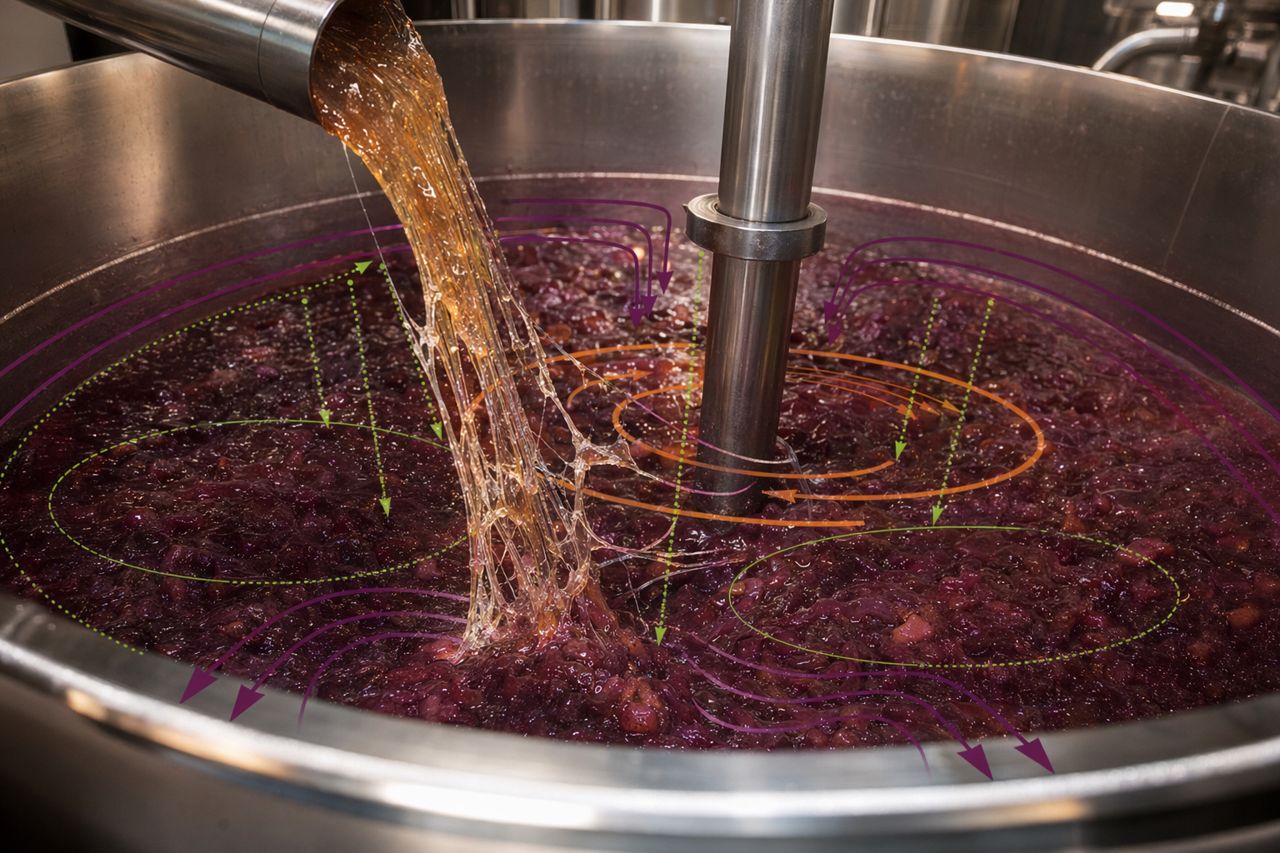
Pectinase is widely used where apples, berries, citrus, stone fruit, tropical fruit, or blended fruit bases create high viscosity or persistent haze. It can be applied in mash treatment, depectinization, clarification, pre-filtration preparation, or extraction support.
Common processing objectives include:
- Increasing free-run juice from crushed fruit
- Reducing press resistance
- Improving clarification before polishing filtration
- Stabilizing process flow for concentrate production
- Supporting more predictable turbidity reduction
- Reducing bottlenecks caused by pectin-rich raw material variation
For juice operations, the key specification question is not simply whether pectinase works. It is where it should be introduced, how long it can contact the substrate, and how it interacts with heat treatment, separation equipment, and final product style.
Wine, Cider, and Fermented Fruit Bases
In wine and cider production, pectinase can support must clarification, juice extraction, color and phenolic release in selected maceration strategies, and improved settling before fermentation or finishing.
It may be considered for:
- Grape must depectinization
- Apple cider pressing support
- Berry wine or fruit wine extraction
- Clarification before fermentation
- Settling support after crushing or maceration
- Filtration load reduction before finishing
Selection should account for grape or fruit variety, skin contact strategy, desired sensory profile, SO2 timing, temperature, and whether the enzyme is used pre-fermentation, during maceration, or prior to clarification.
Fruit Preparations, Purees, and Filling Systems
Fruit preparations and purees often need controlled texture rather than full clarification. In these systems, pectinase is used carefully to manage viscosity, pumpability, particle release, and thermal process consistency.
Relevant targets include:
- Reducing excessive gel behavior in fruit bases
- Improving transfer through heat exchangers and dosing systems
- Supporting uniform blending with stabilizers, sugars, acids, or other ingredients
- Managing fruit piece suspension without over-thinning
- Reducing variation between raw fruit lots
For this category, over-processing can be as costly as under-processing. Pellucid Works focuses on process fit: the right degree of pectin modification for the product architecture.
Ingredient Manufacturing and Plant Extracts
Ingredient manufacturers use pectinase to improve recovery from plant materials where pectin limits extraction, separation, or concentration. It can be part of a broader process that includes milling, maceration, thermal conditioning, pressing, centrifugation, filtration, or evaporation.
Typical objectives include:
- Higher extractable solids release
- Reduced slurry viscosity
- Improved separation of soluble and insoluble fractions
- Lower load on filtration media
- Better feed consistency to evaporators or dryers
- Improved throughput in fruit, vegetable, botanical, and plant-derived ingredient lines
Pectinase may be used alone or as part of a multi-enzyme approach when cellulose, hemicellulose, starch, or protein matrices also affect process performance.
Process Variables That Matter
Pectinase performance depends on the production environment. A useful specification starts with the actual process, not a generic catalog description.
Substrate
Apple mash, citrus pulp, berry puree, grape must, tropical fruit slurry, and botanical extract feeds behave differently. Pectin type, ripeness, soluble solids, particle size, and prior heat exposure all affect treatment response.
Process Step
Pectinase can be introduced during crushing, mash holding, maceration, extraction, clarification, or pre-filtration conditioning. Each point changes contact, shear, residence time, and downstream impact.
pH and Temperature Window
Most fruit systems are naturally acidic, but pH can still shift with variety, blend, or formulation. Temperature influences reaction pace and enzyme stability. Specify the realistic operating window, including heat exposure before and after treatment.
Contact Time and Mixing
A pectinase treatment needs access to substrate. Dense pulp beds, poor agitation, or short residence time can limit performance even when the enzyme selection is correct.
Desired Endpoint
The goal may be full clarification, partial viscosity reduction, press aid performance, extraction improvement, or texture correction. The same enzyme approach is not ideal for every endpoint.
Specification Support from Pellucid Works
We help purchasing, R&D, production, and quality teams define the right pectinase profile for industrial use. A typical specification discussion covers:
- Target application and substrate
- Liquid or powder format preference
- Food-processing suitability requirements
- Compatibility with acidic fruit systems
- Process temperature and hold-time expectations
- Desired effect: clarification, yield, viscosity reduction, extraction, or filtration support
- Packaging size and handling expectations
- Documentation needs such as technical data, safety data, and quality release information
- Forecast volume, trial quantity, and commercial supply planning
Pectinase sourcing works best when technical and procurement requirements are aligned early. That prevents mismatches between lab success, plant handling, regulatory documentation, and commercial lead time.
Buyer Checklist: What to Include in a Quote Request
To receive a focused recommendation and pricing response, include as much of the following as possible:
- Product type: juice, wine, cider, puree, extract, fruit preparation, or other process stream
- Main raw material: apple, grape, citrus, berry, stone fruit, tropical fruit, botanical, or blend
- Current pain point: viscosity, low yield, slow clarification, haze, filter blockage, press inefficiency, or inconsistent texture
- Process stage where pectinase would be used
- Approximate pH and temperature window
- Available contact time
- Batch or continuous process description
- Current separation equipment: press, decanter, centrifuge, membrane, filter press, depth filtration, or other system
- Preferred product format and packaging
- Trial timeline and expected commercial volume
Why Teams Specify Pectinase Through Pellucid Works
- Process-first recommendations for industrial users
- Clear fit between enzyme function and production objective
- Support for formulation, plant trial, and procurement teams
- Practical documentation for B2B review
- Premium technical presentation without unnecessary claims
- Responsive quote handling through this site’s own contact workflow
Pectinase is a small input with a large process footprint. When it is selected well, it can make fruit systems easier to press, easier to clarify, easier to filter, and easier to scale.
Request a Quote or Get Pricing
Use the form below to contact Pellucid Works directly. A technical sales specialist will review your application details and respond with next steps for pricing, availability, and specification alignment.